Featured
Table of Contents

One of the important things the group participants discovered handy, she remembers, was building interaction and boundary-setting abilities that they could utilize with their member of the family. The team spoke a whole lot about exactly how to remain tranquil, manage their body movement and maintain a problem-solving (instead of blaming) focus when having "take on discussions" with member of the family concerning habits and patterns that had been adopted due to generational trauma, she says.
This client's need not to pass on her injury reactions to her youngsters, along with her anxiety about being bad and abusive, is what led her to seek counseling, Guyton adds. When the client started to explore her family background, including the pressures her grandmother faced as she emigrated from her Caribbean homeland to the USA, she understood "I require to talk with her," Guyton remembers.
Why Conventional Therapy Isn't Enough
Guyton after that prompted the client to talk to her grandmother and share how she was really feeling. The client responded by stating, "I see you, Grandma.
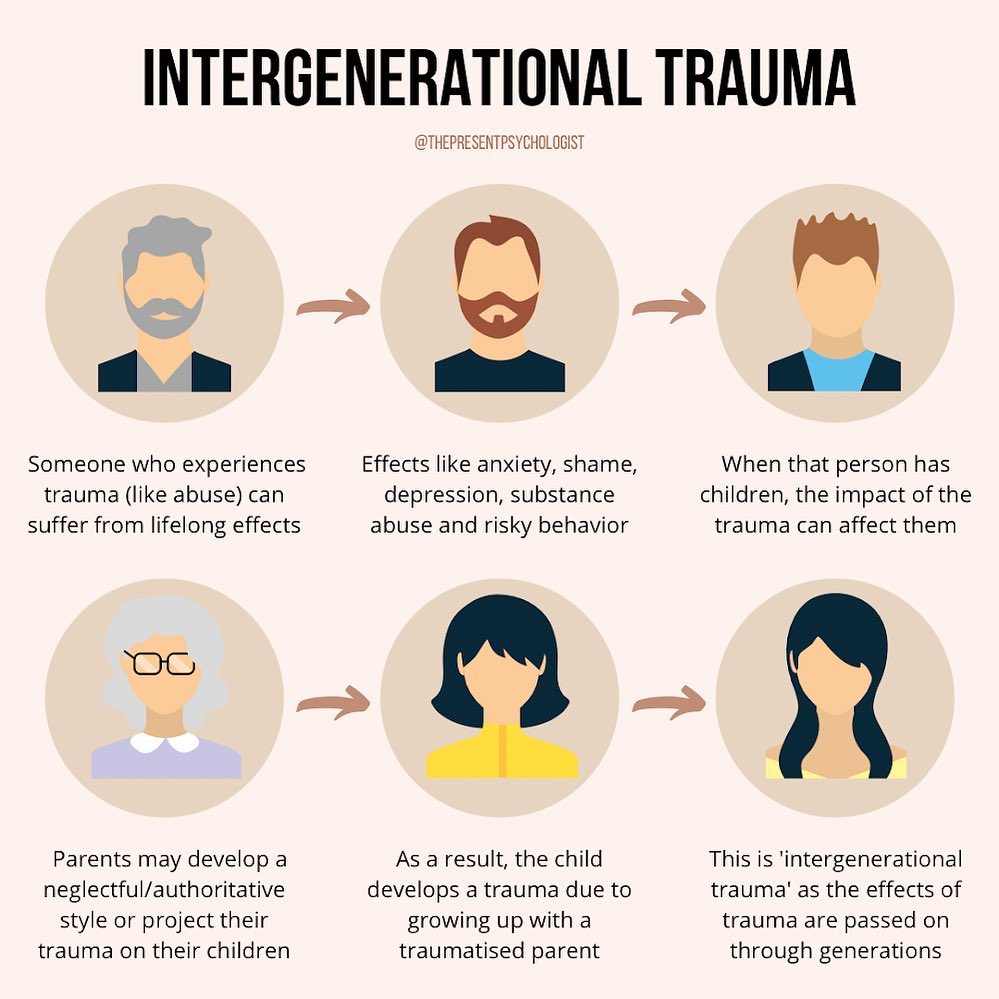
Goodman prompts therapists to broach this subject not just at the start of therapy work with a client but also with regular check-ins throughout the partnership.
"Privileged groups can still have generational trauma, also though it's not spoken regarding as much," she claims. "Any person that has actually experienced trauma can pass it down.
Intergenerational Trauma in Second-Generation Families
The truth is that customers do not reside in a vacuum cleaner; they can pursue recovery individually in counseling yet will inevitably return to live within their culture and family members system, she notes."Generational injury is simply that a specific whose trauma is continued within family members and culture," Petion adds. With this client populace, professionals have to "believe beyond the specific sitting in front of us" in therapy, she worries, and concentrate on how they are recovery in connection to their household and area.
At the exact same time, therapists need to keep in mind that it might not be the customer's duty to "deal with" or heal their household or neighborhood, Mike warns. "They might require to make tranquility with healing themselves without handling whole systems," he claims. Generational trauma "can be a biological thing, an emotional point, a social thing.

Opinions expressed and declarations made in posts appearing in Therapy Today do not always represent the viewpoints of the editors or policies of the American Therapy Association.
It can really feel both defeating and verifying to find that the concept of generational injury reverberates with you. On one hand, it can be comforting to know that you're not "crazy" or alone in this experience. On the other hand, you might not understand how to move onward with this information.
The Success-Guilt Cycle
There are lots of great sources out there, including videos, social media messages, and podcasts. Past online content, I also urge you to discover some generational trauma publications. It can be exceptionally confirming to speak with individuals with comparable experiences, including scientists with a deep understanding of these characteristics.
Session size is determined on the specific client needs. AEDP is normally offered in outpatient treatment centers or exclusive method settings.
Particular or periodic couples therapy sessions can be integrated as required to support the main customer. Treatment often tends to be long-lasting, with therapy duration usually surpassing one year. IFS is a therapeutic approach which views the internal system as having subparts or subpersonalities, each with distinct systems of being internally organized to ideal serve the environment an individual is in.
Healing Discrimination and Cultural Trauma
This self consists of an individual's strengths and abilities which normally overviews a person to a healthy life or recovery. IFS' goal is to attain balance within the internal system by: setting apart the self from other subparts, permitting the self to lead with subparts sustain, andallowing all subparts to exist with cooperative, non-extreme intent.
As a result of its individualized nature, size of treatment is dependent upon the demands of the client(s). IFS is frequently promoted in an outpatient setup. Recognizing the certain obstacles experienced by adult survivors of intricate injury, STAIR/MPE is a two-phase restorative intervention concentrated on ability structure and exposure-based treatment in the context of an empathetic and trustworthy connection.
Clients are supplied with skill training to: enhance policy capabilities, enhance distress tolerance, andexplore new approaches of engaging with and associating to others, setting the foundation for the second phase of therapy. Stage 2 supports customers in more handling through stressful situations using a changed version of extended exposure. Via, customers are subjected to trauma-related memories to: increase understanding of the client's affective and emotional experience, practice law skills, andprocess through difficult motifs such as rejection, pity, loss, and dishonesty.
Eliminating Obstacles to Expert Care
These experiences can leave durable symptoms well after the event mores than. When it comes to developing injury, injury which is typically relational and repeated overtime, an individual might not understand just how their previous experiences can be linked to a selection of signs. Problems with connection to others, a total sense of anxiety or fear, a general tingling or feeling of not being fully to life are a few of the reasons to discover injury treatment.

Latest Posts
Impact of Shared Experience in Dialectical Behavior Therapy
Beginning Care With a Burnout & Stress Provider
Why Telehealth Therapy Works for New Moms